Article Plan: Types of Fire Extinguishers and Uses (PDF Focus)
Understanding fire extinguisher classifications – A‚ B‚ C‚ D‚ and K – is crucial for effective fire suppression‚ as detailed in safety guides and
PDF resources.
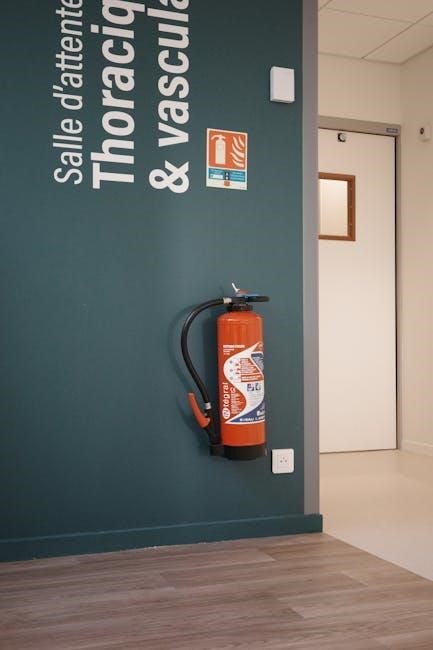
Portable fire extinguishers are vital first-response tools‚ designed to combat small‚ contained fires before they escalate. Knowing the different types of fire extinguishers and their appropriate uses is paramount for safety‚ and readily available in comprehensive PDF guides from organizations like OSHA and National Fire Supply.
These devices aren’t a substitute for professional fire services; however‚ they can significantly mitigate damage and potentially save lives when used correctly. Effective use hinges on understanding fire classes – A‚ B‚ C‚ D‚ and K – and selecting an extinguisher rated for the specific fuel source. Resources emphasize that evacuation remains the priority‚ with extinguisher use only advisable for small‚ manageable fires.
The Fire Triangle and Extinguishing Principles
The fire triangle illustrates the three elements necessary for combustion: heat‚ fuel‚ and an oxidizing agent (typically oxygen). Extinguishing a fire requires removing one or more of these elements. APWs (Air-Pressurized Water) work by cooling the fuel‚ removing the heat component‚ and are effective on Class A fires – common combustibles like wood and paper.
However‚ applying water to flammable liquid fires (Class B) is dangerous‚ potentially spreading the blaze. Different extinguisher types target specific elements; foam smothers‚ CO2 displaces oxygen‚ and dry chemicals interrupt the chemical reaction. Understanding these principles‚ detailed in safety PDFs‚ is key to selecting the correct extinguisher for each fire scenario.

Class A Fire Extinguishers
Class A fire extinguishers are specifically designed for ordinary combustible materials like wood‚ paper‚ cloth‚ rubber‚ and certain plastics. APWs (Air-Pressurized Water) are a common type‚ extinguishing fires by cooling the fuel below its ignition temperature‚ effectively removing the heat element of the fire triangle.
However‚ these are limited to Class A fires only. Newer water mist extinguishers offer advantages‚ utilizing smaller water droplets for increased surface area and faster cooling. PDF guides emphasize that water should never be used on flammable liquid fires. Choosing the right extinguisher‚ as detailed in safety resources‚ is vital for effective and safe fire suppression.
What Materials Class A Fires Involve
Class A fires encompass a wide range of common‚ everyday materials. These include solid combustibles such as wood‚ from furniture to structural beams‚ and paper products like documents and packaging. Cloth‚ encompassing textiles in upholstery and clothing‚ also falls into this category‚ alongside rubber items like tires and hoses.
Furthermore‚ certain plastics‚ particularly those that melt and burn readily‚ are considered Class A fuels. Understanding these materials is crucial‚ as detailed in fire safety PDF guides‚ for selecting the appropriate extinguisher. Effective suppression relies on recognizing these common combustibles and utilizing extinguishers designed for their specific properties.
Water Extinguishers: Mechanism and Effectiveness
Water extinguishers operate on a simple yet effective principle: cooling. They reduce the heat element of the fire triangle‚ bringing the fuel’s temperature below its ignition point. This is particularly effective on Class A fires involving materials like wood‚ paper‚ and cloth.
However‚ as highlighted in safety PDFs‚ water is ineffective and dangerous on flammable liquid fires (Class B)‚ potentially spreading the blaze. APWs (Air-Pressurized Water) are specifically designed for Class A fires only. Their effectiveness stems from the water’s high heat absorption capacity‚ quickly suppressing flames and preventing reignition when applied correctly.
Water Mist Extinguishers: Advantages over Traditional Water
Water mist extinguishers represent an advancement over traditional water extinguishers‚ offering enhanced safety and effectiveness. They discharge water as a fine mist‚ increasing the surface area for rapid evaporation and cooling. This mist also creates a barrier against heat‚ suppressing reignition more effectively.
Unlike traditional water streams‚ water mist is electrically non-conductive‚ making it safer for use near energized electrical equipment – though still not recommended for Class C fires. PDF guides emphasize their reduced risk of scattering burning materials‚ minimizing fire spread. They offer a balance between cooling and oxygen displacement‚ improving performance on Class A fires.
Class B Fire Extinguishers
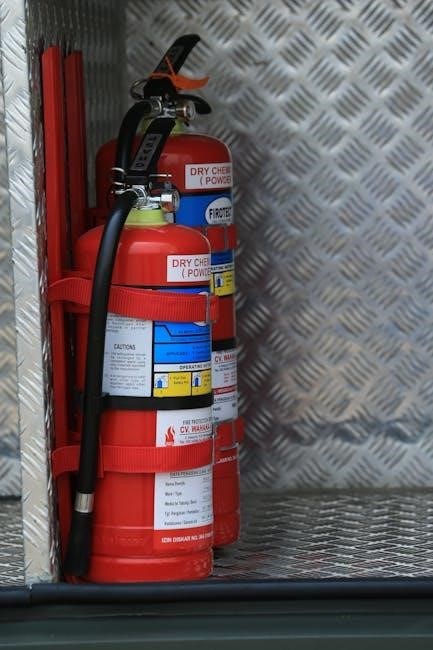
Class B fires involve flammable liquids like gasoline‚ oil‚ grease‚ and solvents. These fires pose unique challenges due to rapid spread and reignition. PDF resources highlight the danger of using water on these fires‚ as it can exacerbate the situation by spreading the flammable liquid.
Effective Class B extinguishers disrupt the fire triangle by smothering the fuel‚ preventing oxygen from reaching it. Foam extinguishers are frequently recommended‚ creating a blanket that suppresses vapors and cools the fuel. CO2 extinguishers displace oxygen‚ but have limited range and can be less effective in windy conditions. Choosing the correct extinguisher‚ as detailed in safety guides‚ is vital.
Identifying Class B Fires (Flammable Liquids)
Recognizing Class B fires is critical for selecting the appropriate extinguisher. These fires are fueled by flammable liquids such as gasoline‚ oil‚ paint thinners‚ and grease. They are characterized by a rapid flame spread and often produce significant smoke. PDF safety guides emphasize observing the source of the fire – if a flammable liquid is burning‚ it’s a Class B fire.
Crucially‚ these fires do not involve electrical components. Unlike Class C fires‚ there’s no risk of electrocution. However‚ attempting to extinguish a Class B fire with water is extremely dangerous‚ as it will spread the burning liquid‚ intensifying the blaze. Proper identification‚ as detailed in extinguisher guides‚ ensures a safe and effective response.
Foam Extinguishers: How They Work and Why They’re Preferred
Foam extinguishers are highly effective on Class A and B fires‚ making them versatile for homes and offices. They work by creating a blanket of foam that smothers the fire‚ cutting off the oxygen supply and cooling the fuel. PDF resources highlight their advantage over water‚ as foam prevents re-ignition by suppressing vapors.
Furthermore‚ foam extinguishers cause less collateral damage compared to other agents. They minimize splashing and runoff‚ protecting sensitive equipment. Reddit discussions emphasize foam as a preferred choice due to its broad applicability and reduced secondary damage. Safety guides detail proper application techniques for maximum effectiveness‚ ensuring complete coverage of the burning surface.
CO2 Extinguishers: Use Cases and Limitations for Class B Fires
Carbon dioxide (CO2) extinguishers are suitable for Class B fires – flammable liquids – by displacing oxygen and cooling the fuel. PDF guides emphasize their effectiveness in enclosed spaces‚ where the CO2 concentration quickly smothers the flames. However‚ they have limitations; CO2 is ineffective on Class A fires as it doesn’t provide sufficient cooling.
Crucially‚ CO2 extinguishers offer no lasting effect‚ meaning re-ignition is possible if the source of ignition remains. Occupational Safety and Health Administration resources warn against using water on flammable liquid fires‚ as it can spread the blaze. Proper ventilation is vital after CO2 use due to the risk of asphyxiation‚ as detailed in safety manuals.
Class C Fire Extinguishers
Class C fires involve energized electrical equipment‚ presenting unique hazards. PDF resources highlight the critical risk of electrocution if water-based extinguishers are used. Therefore‚ non-conductive agents are essential for safety. CO2 extinguishers are frequently the primary choice‚ effectively smothering the fire without electrical conductivity.
However‚ clean agent extinguishers are emerging as alternatives‚ offering benefits like leaving no residue‚ which is crucial for sensitive electronic equipment. Guides emphasize that once the electrical source is disconnected‚ a Class C fire becomes a Class A or B fire‚ allowing for alternative extinguishing methods. Always prioritize personal safety and de-energize the circuit if possible.
Electrical Fires: The Risks and Precautions
Electrical fires pose significant dangers beyond the flames themselves‚ primarily the risk of severe electric shock. PDF guides strongly advise against using water on such fires‚ as water conducts electricity‚ potentially causing fatal injuries. Before attempting to extinguish an electrical fire‚ always disconnect the power source if it’s safe to do so;
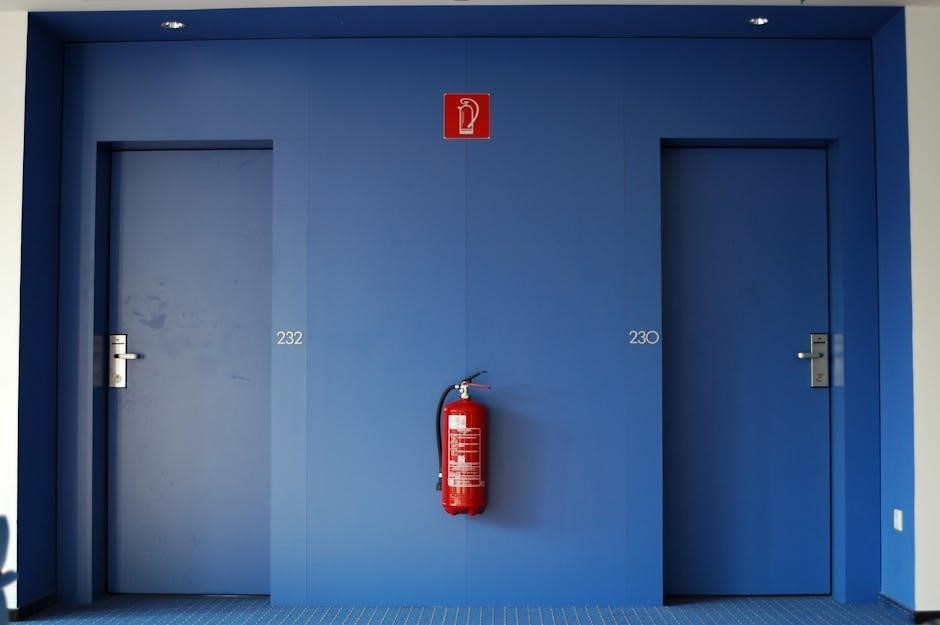
If de-energizing isn’t possible‚ utilize a Class C fire extinguisher – typically CO2 or a clean agent – designed for non-conductive suppression. Maintain a safe distance and avoid direct contact with electrical components. Remember‚ attempting to extinguish an electrical fire without proper precautions can be extremely hazardous.
CO2 Extinguishers: The Primary Choice for Class C Fires
Carbon dioxide (CO2) extinguishers are the preferred method for combating Class C fires – those involving energized electrical equipment – due to their non-conductive nature. PDF resources emphasize that CO2 extinguishes by displacing oxygen‚ effectively smothering the fire without leaving a residue. This is critical around sensitive electronics.
However‚ CO2 has limitations. It’s less effective in open or windy environments as the gas dissipates quickly. Furthermore‚ CO2 can pose an asphyxiation hazard in confined spaces‚ so proper ventilation is essential after use. Always follow the PASS method and prioritize personal safety when deploying a CO2 extinguisher.
Clean Agent Extinguishers: Alternatives to CO2
Clean agent extinguishers‚ often Halotron or FM-200‚ present viable alternatives to CO2 for Class C fires‚ particularly where minimizing collateral damage is paramount. PDF guides highlight their non-conductive properties and leave no residue‚ making them ideal for protecting delicate electronic equipment.
Unlike CO2‚ clean agents generally pose a lower risk of asphyxiation‚ enhancing safety in enclosed spaces. However‚ they are typically more expensive than CO2 extinguishers. These agents interrupt the chemical reaction of the fire‚ offering rapid extinguishment. Proper training and understanding of the specific agent’s characteristics are crucial for effective and safe deployment.
Class D Fire Extinguishers
Class D fires involve combustible metals like magnesium‚ titanium‚ and sodium‚ presenting unique challenges due to their high temperatures and reactivity. Standard extinguishers are ineffective and can even worsen these fires. PDF resources emphasize the necessity of specialized dry powder extinguishers specifically designed for Class D hazards.
These extinguishers work by smothering the metal fire‚ creating a crust to isolate it from oxygen. Different metal fires require different dry powder agents; using the wrong one can be dangerous. Application techniques‚ often involving gentle sweeping motions‚ are critical to avoid scattering the burning metal. Safety data sheets within PDF guides detail appropriate agent selection and usage protocols.
Combustible Metal Fires: Unique Challenges
Combustible metal fires pose significant risks due to the metals’ rapid reaction with oxygen and the extremely high temperatures generated. Unlike common fires‚ water and many standard extinguishing agents can exacerbate these blazes‚ causing violent reactions and spreading the burning material. PDF safety guides highlight the importance of recognizing these unique hazards.
These fires often burn intensely without visible flames‚ making detection difficult. The finely divided metal particles have a large surface area‚ leading to rapid combustion. Specialized training and the correct extinguishing agent – a dry powder specifically formulated for the metal involved – are essential for safe and effective suppression‚ as detailed in comprehensive PDF resources.
Dry Powder Extinguishers (Specific for Class D): Types and Application
Class D dry powder extinguishers utilize specialized agents designed to smother combustible metal fires. These aren’t the same as ABC dry chemical extinguishers; they have unique compositions tailored to the specific metal burning – sodium‚ magnesium‚ titanium‚ etc. PDF guides emphasize selecting the correct powder for the metal involved.
Application involves gently applying the powder to completely cover the burning metal‚ creating a smothering blanket and cutting off oxygen supply. Avoid forceful streams‚ which can disperse the burning metal. Proper technique‚ detailed in safety PDFs‚ is crucial. Different types of dry powder‚ like sodium chloride-based or graphite-based‚ are chosen based on the metal’s properties‚ ensuring effective and safe fire suppression.
Class K Fire Extinguishers
Class K fire extinguishers are specifically designed for kitchen fires involving cooking oils and grease. These fires burn at higher temperatures than typical Class B flammable liquid fires‚ requiring a different extinguishing approach. PDF resources highlight the dangers of using water on grease fires‚ as it causes violent splattering and spreads the fire.
Wet chemical extinguishers are the standard for Class K fires. They contain a potassium acetate-based agent that creates a soapy foam – a process called saponification – which cools the oil and forms a barrier preventing re-ignition. Detailed guides available in PDF format emphasize proper application techniques for maximum effectiveness and safety in a kitchen environment.
Kitchen Fires: Cooking Oils and Grease
Kitchen fires‚ particularly those involving cooking oils and grease‚ present unique hazards. These fires burn hotter than many other common household fires‚ and attempting to extinguish them with water is extremely dangerous‚ potentially causing a violent flare-up and spreading the flames. PDF safety guides strongly advise against this practice.
Cooking oil fires require specialized extinguishing agents like those found in Class K extinguishers. These agents work by saponifying the grease‚ creating a soapy layer that smothers the fire and cools the oil below its ignition temperature. Comprehensive PDF resources detail the risks and proper response procedures for kitchen grease fires‚ emphasizing prevention and safe extinguishing techniques.
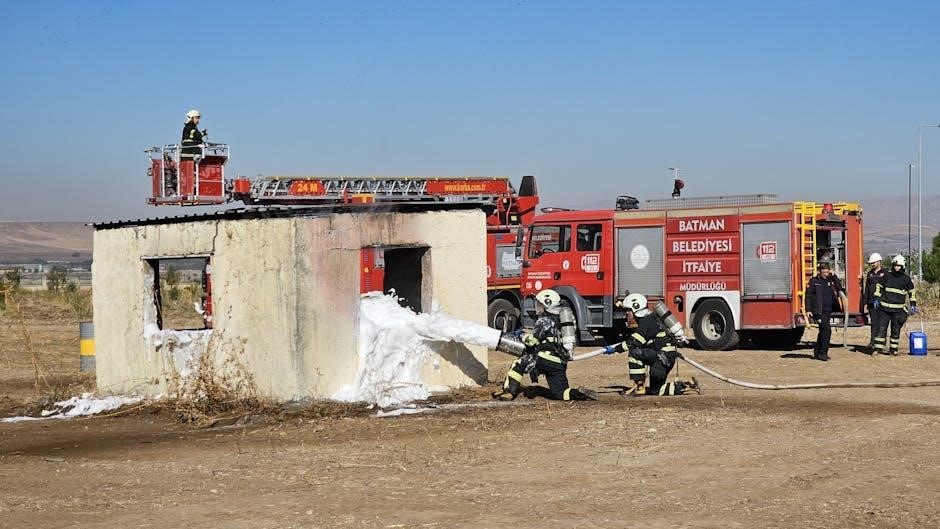
Wet Chemical Extinguishers: Saponification Process Explained
Wet chemical extinguishers are specifically designed for Class K fires – those involving cooking oils and grease. Their effectiveness hinges on the saponification process‚ a chemical reaction between the extinguishing agent (typically potassium acetate‚ potassium citrate‚ or potassium carbonate) and the hot oil or grease.
Saponification transforms the grease into a soapy foam‚ creating a blanket that both smothers the fire by cutting off oxygen and cools the burning substance. PDF guides emphasize that this process is far more effective and safer than using water‚ which can cause dangerous splattering. Detailed diagrams within these resources illustrate the chemical reaction and demonstrate the extinguisher’s application.
Extinguisher Color Coding
Consistent color coding is vital for quick identification of fire extinguisher types‚ as highlighted in numerous safety PDFs. Red extinguishers typically contain water‚ while cream-colored ones indicate foam. Blue signifies dry powder extinguishers‚ often used for Class D fires.
Yellow extinguishers are specifically for wet chemical agents‚ crucial in kitchens. Green denotes clean agent extinguishers‚ and black identifies CO2 extinguishers. These color schemes aren’t just conventions; they’re standardized for immediate recognition during emergencies. PDF resources often include charts detailing these color associations‚ ensuring users can swiftly select the appropriate extinguisher for the fire type.
Red Extinguishers: Typically Water-Based
Red fire extinguishers are most commonly filled with water‚ designed for Class A fires – involving ordinary combustibles like wood‚ paper‚ and cloth. PDF guides emphasize that these extinguishers cool the burning material below its ignition temperature. However‚ crucial safety information warns against using water on flammable liquid or electrical fires.
APW (Air-Pressurized Water) extinguishers‚ often red‚ are simple and effective for their intended purpose. Detailed PDFs illustrate the mechanism of cooling the fuel surface‚ removing the heat element of the fire triangle; Always consult safety documentation before use‚ as improper application can spread certain types of fires.
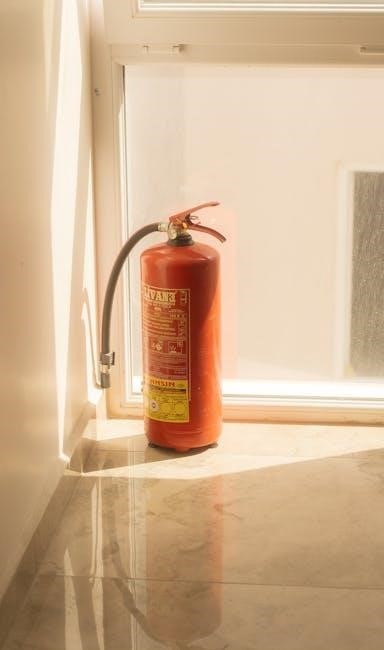
Cream Extinguishers: Foam Identification
Cream-colored fire extinguishers typically contain foam‚ effective on both Class A and Class B fires – ordinary combustibles and flammable liquids. PDF resources highlight foam’s ability to create a barrier‚ suppressing vapors and preventing reignition. This makes them a versatile choice for homes and offices‚ where both types of fires are common.
AFFF (Aqueous Film Forming Foam) extinguishers are frequently cream-colored. They work by forming a film over the fuel‚ cutting off oxygen supply. Guides emphasize foam creates less secondary damage compared to water. However‚ PDFs also caution against using foam on electrical fires‚ stressing the importance of correct extinguisher selection.
Blue Extinguishers: Dry Powder Designation
Blue fire extinguishers universally signify dry powder agents‚ specifically designed for tackling Class D fires – involving combustible metals like magnesium‚ titanium‚ and sodium. PDF guides detail how these powders smother the fire and create a heat-absorbing crust. They are crucial in industrial settings where metal fires pose a unique hazard.
Dry powder extinguishers‚ while effective on Class D fires‚ can also be used on Class B fires‚ though foam is often preferred due to reduced cleanup. Safety resources emphasize the importance of using the correct dry powder for the specific metal involved. PDFs warn against using water on metal fires‚ as it can exacerbate the situation.
Yellow Extinguishers: Wet Chemical Indicators
Yellow-colored fire extinguishers denote wet chemical extinguishing agents‚ primarily used for Class K fires – those involving cooking oils and grease in commercial kitchens. PDF resources explain that these extinguishers utilize a special alkaline agent that creates a soapy foam‚ a process called saponification‚ effectively smothering the fire and cooling the oil.
Wet chemical extinguishers are highly effective because they prevent re-ignition‚ unlike water which can splatter burning grease. Safety guides emphasize their specific application to kitchen environments. PDFs detail proper usage techniques‚ including directing the nozzle at the base of the flames. They are not suitable for other fire classes.
Green Extinguishers: Clean Agent Recognition
Green fire extinguishers signify clean agent extinguishers‚ offering a residue-free solution for sensitive environments. PDF guides highlight their use on Class A‚ B‚ and C fires‚ making them versatile for electrical equipment rooms and areas with valuable assets. These agents‚ like halotron or FM-200‚ interrupt the chemical reaction of the fire without leaving damaging deposits.
Clean agent extinguishers are favored where water or dry chemical damage is a concern. Safety resources detail their effectiveness and minimal toxicity. However‚ PDFs also caution about proper ventilation after use. They are often more expensive than other types‚ but provide superior protection for delicate equipment.
Black Extinguishers: CO2 Extinguisher Color
Black fire extinguishers universally denote carbon dioxide (CO2) extinguishers‚ as detailed in numerous fire safety PDF guides. These are primarily used for Class B (flammable liquids) and Class C (electrical) fires. CO2 extinguishes by displacing oxygen‚ effectively smothering the flames without leaving a residue.
PDF resources emphasize the importance of using CO2 extinguishers in enclosed spaces cautiously‚ as the displaced oxygen can pose a suffocation hazard. They are effective on flammable liquid spills but have limited range. Training materials highlight that CO2 is not suitable for Class A fires (ordinary combustibles) as it won’t penetrate deeply enough to cool the fuel.
Choosing the Right Extinguisher for Your Needs
Selecting the appropriate fire extinguisher is paramount for safety‚ and PDF guides emphasize assessing potential fire hazards. For homes‚ a multi-purpose ABC extinguisher is often recommended‚ covering common combustibles‚ flammable liquids‚ and electrical fires. Businesses should conduct thorough risk assessments to determine specific needs.
PDF resources detail that kitchens require Class K extinguishers for grease fires‚ while workshops dealing with metals need Class D extinguishers. Consider the size of the potential fire; larger areas may necessitate multiple extinguishers or larger capacity units. Always prioritize extinguishers with a clear UL rating‚ ensuring they meet safety standards‚ as outlined in downloadable safety manuals.
Fire Extinguisher Inspection and Maintenance
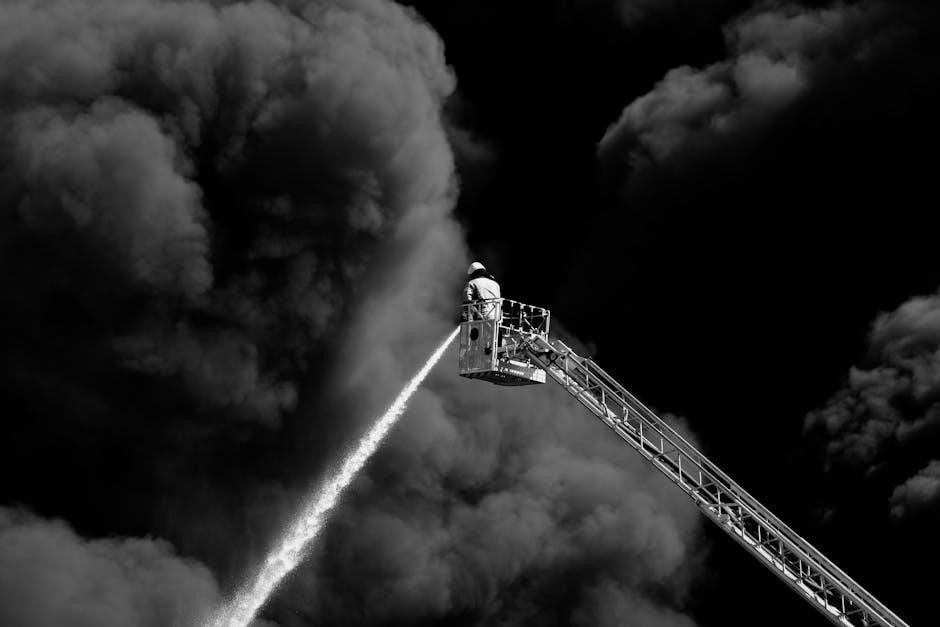
Regular inspection and maintenance‚ detailed in numerous PDF guides‚ are vital for extinguisher reliability. Monthly checks should verify the pressure gauge is within the green zone‚ the pin is intact‚ and there’s no visible damage. Annual professional inspections‚ as mandated by safety standards‚ involve a more thorough examination of the internal components.
PDF resources highlight the importance of documenting all inspections. Recharge or replace extinguishers immediately after any use‚ even partial discharge. Hydrostatic testing‚ required periodically (typically every 5-12 years)‚ ensures the cylinder’s integrity. Proper maintenance‚ as outlined in safety manuals‚ guarantees optimal performance when needed.
Proper Fire Extinguisher Usage (PASS Method)
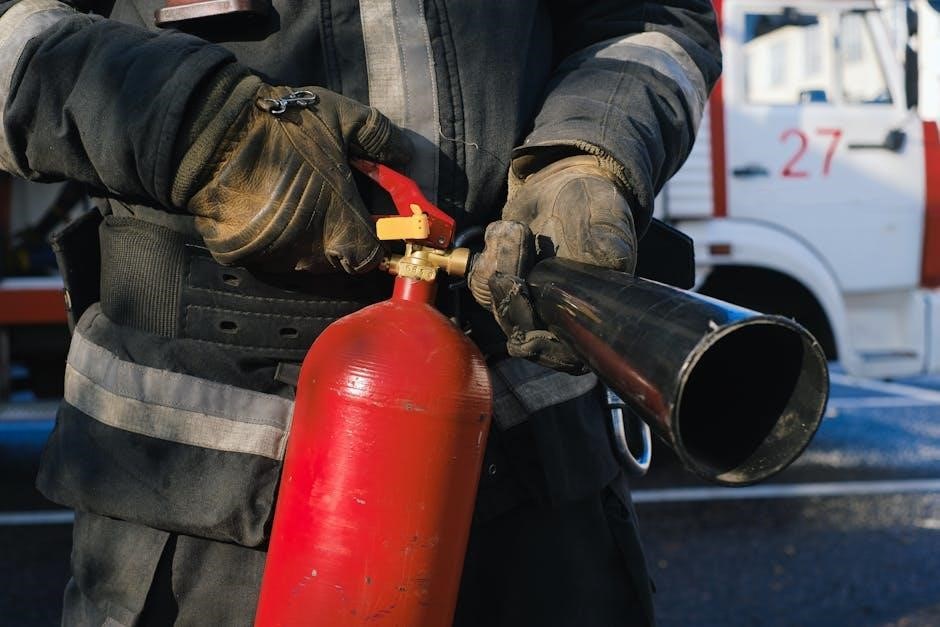
Effective fire extinguisher operation relies on the universally recognized PASS method‚ thoroughly explained in safety PDFs. Pull the pin‚ breaking the tamper seal. Aim the nozzle at the base of the fire‚ not the flames. Squeeze the handle to discharge the extinguishing agent. Sweep from side to side‚ covering the burning material.
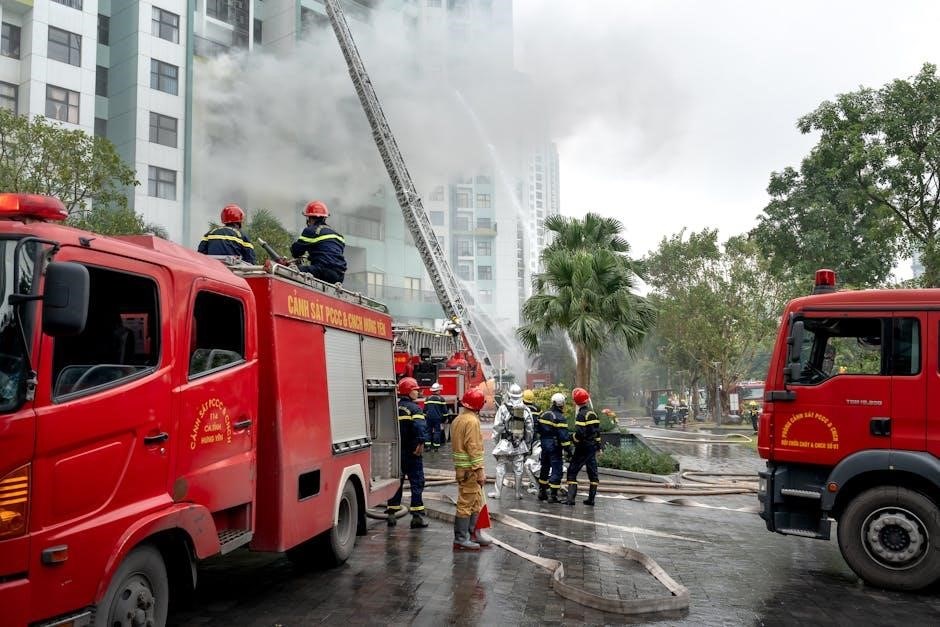
PDF guides emphasize maintaining a safe distance and ensuring an escape route. Remember‚ extinguishers are for small‚ contained fires. If the fire spreads rapidly or becomes uncontrollable‚ evacuate immediately and call emergency services. Practice the PASS method to ensure quick and confident response during a fire emergency.
Safety Precautions When Using a Fire Extinguisher
Prioritize personal safety when confronting a fire‚ as detailed in comprehensive PDF safety manuals. Always position yourself with an escape route behind you‚ ensuring you aren’t trapped. Be aware of potential hazards like smoke inhalation and falling debris. Never fight a fire that is spreading rapidly or blocking your exit.
PDF resources strongly advise against attempting to extinguish fires beyond your capabilities. If unsure about the fire type or extinguisher suitability‚ evacuate immediately. After discharge‚ even if only partially used‚ have the extinguisher professionally inspected and recharged. Remember‚ your life is the priority.
Fire Extinguisher PDF Resources and Guides
Numerous online resources offer downloadable PDF guides on fire extinguishers‚ detailing types‚ uses‚ and safety protocols. The Occupational Safety and Health Administration (OSHA) provides eTools and standards‚ including portable fire extinguisher basics. National Fire Supply offers comprehensive class-specific guides (A‚ B‚ C‚ D‚ K) for safe fire fighting.
IFSEC Insider and other industry websites host articles and downloadable resources. These PDFs often include color-coding charts and detailed explanations of extinguishing agents. Always consult multiple sources and prioritize official guidelines for accurate information. Regularly reviewing these guides ensures preparedness and reinforces safe practices.